
A private London clinic integrating psychiatry and psychology
Thought Pieces & Videos
8 Oct 25 Thought Piece
Bridging the Mind and the Body
Contributors

Ms Ilse du Preez
BA (Hons), MA (cum laude)
There’s a common misconception that physical and mental health exist in separate realms, barely influencing one another. However, anyone who’s ever felt their stomach churning before a difficult conversation knows that the boundary between mind and body is not merely blurred but they are intrinsically connected.
Now, a growing body of research is teaching us just how tightly interwoven our psychological and physiological experiences truly are.
Written by Nadine Seif, BSc, Assistant Psychologist, Sloane Court Clinic
Mental Health expressed in the Body
People often report to their doctors' physical symptoms like persistent headaches, muscle tension, digestive issues or heart palpitations that seem to occur out of the blue. In cases where no clear medical cause can be identified, it may be that the body is expressing what the mind may be struggling with.
Perhaps the most tangible example, digestive issues are almost undoubtably connected to the mind through what is called the gut-brain axis. When asked to keep track of symptoms, it is not uncommon for patients to find their gastrological symptoms coincide with heightened emotional stress. Whether mild or chronic, gastrointestinal pain or discomfort are recognised as both psychological and physical. Stress, trauma or emotional dysregulation can show up through the digestive system, causing persistent discomfort even in the absence of a physical cause.
Many people also report getting ill more easily and often during times of stress. This apparent dampening of our immune systems as a result of stress may explain the classic example of someone feeling burnt out at work constantly battling colds.
Additionally, stress can place a strain on the cardiovascular system, elevating the risk of heart-related symptoms. It is quite common for people experiencing panic attacks to go to hospital, believing they are having a heart attack. Over time, chronic stress can compromise both sleep and energy levels, leaving us physically and mentally drained.
These are all very real physical symptoms that may be rooted in emotional states, and so it is often the case that mental health support is needed for them to be effectively treated. While these connections have been studied with a range of findings, it is seeming more and more evident that emotional and physical states are deeply intertwined.
Physical Health Influencing the Mind
While emotions may impact our physical health, living with a chronic illness or physical condition can take a considerable toll on one’s emotional wellbeing too.
People with long-term health issues often experience depression, not just in response to their symptoms, but due to the limitations, unpredictability, and sense of lost control that they can impose. People may struggle with how to maintain their identity if their physical health was a big part of how they saw themselves in the world. You might consider an athlete who is no longer be able to compete or a surgeon who is no longer be able to operate. Who are they now? Accepting one’s circumstances and adapting to their new normal can be very emotional and the time taken to do so will differ greatly from person to person.
Anxiety may also arise when illness is unpredictable; one may find oneself worrying about the intensity or timing of the next flareup or paying constant attention to one’s bodily sensations, further fuelling the anxiety.
The Feedback Loop
The cyclical nature of this connection can make it difficult to break. As the mind continues to impact the body, emotional distress can precipitate physical symptoms. At the same time, the rise in physical symptoms may intensify emotional distress. This allows the cycle to perpetuate and may foster a sense of feeling “stuck” in the loop.
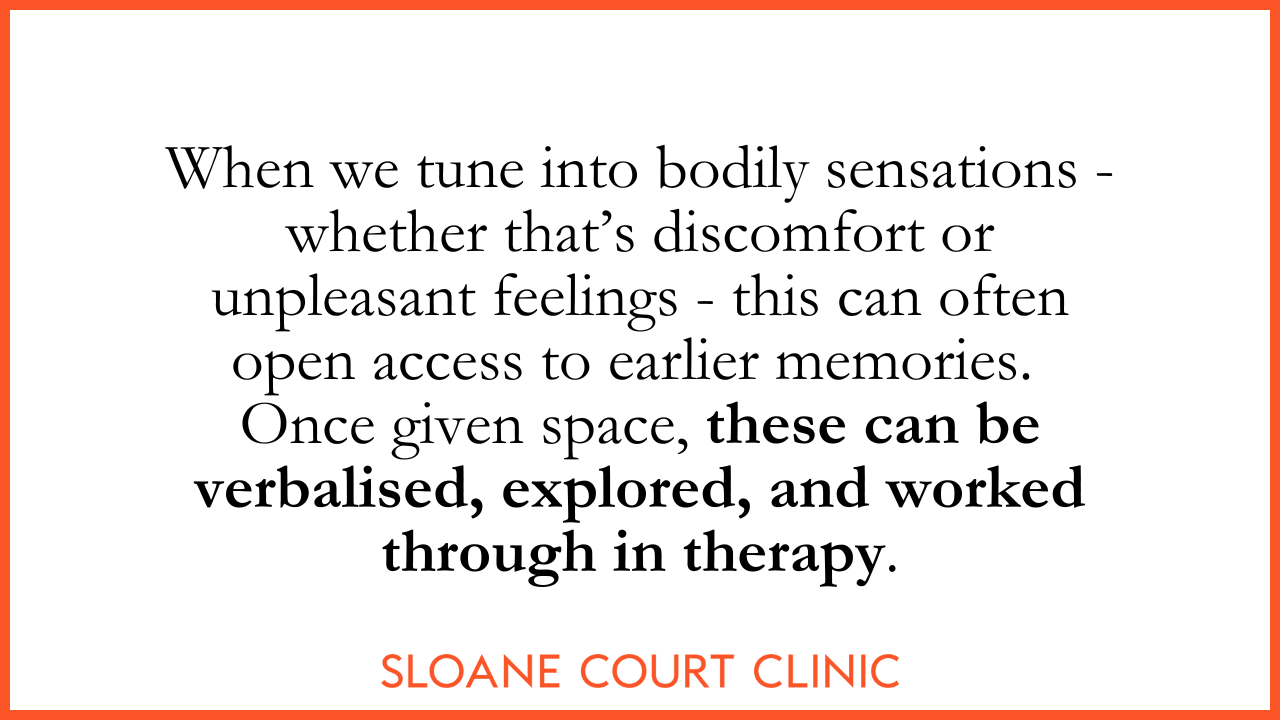
“The body also keeps memories, and when we tune into bodily sensations - whether discomfort or unpleasant feelings - this can often open access to earlier memories”, comments Ilse du Preez, Clinical Psychologist at SCC. Exemplifying this connection’s potential value, she goes on to say that “once given space, these can be verbalised, explored, and worked through in therapy.”
Acknowledging the connection between the mind and body can direct those suffering from seemingly unexplained symptoms to getting the help they need. Recognising this feedback loop is essential in providing effective care and highlights the value of holistic, personalised intervention.
Whether symptoms originate from the mind or the body, our clinicians’ integrated approach allows for them to be addressed from multiple angles. At the Sloane Court Clinic, we aim to consider both physical and emotional factors throughout both assessment and treatment, endeavouring to understand the full context of each patient’s experiences and treat them as a whole person.